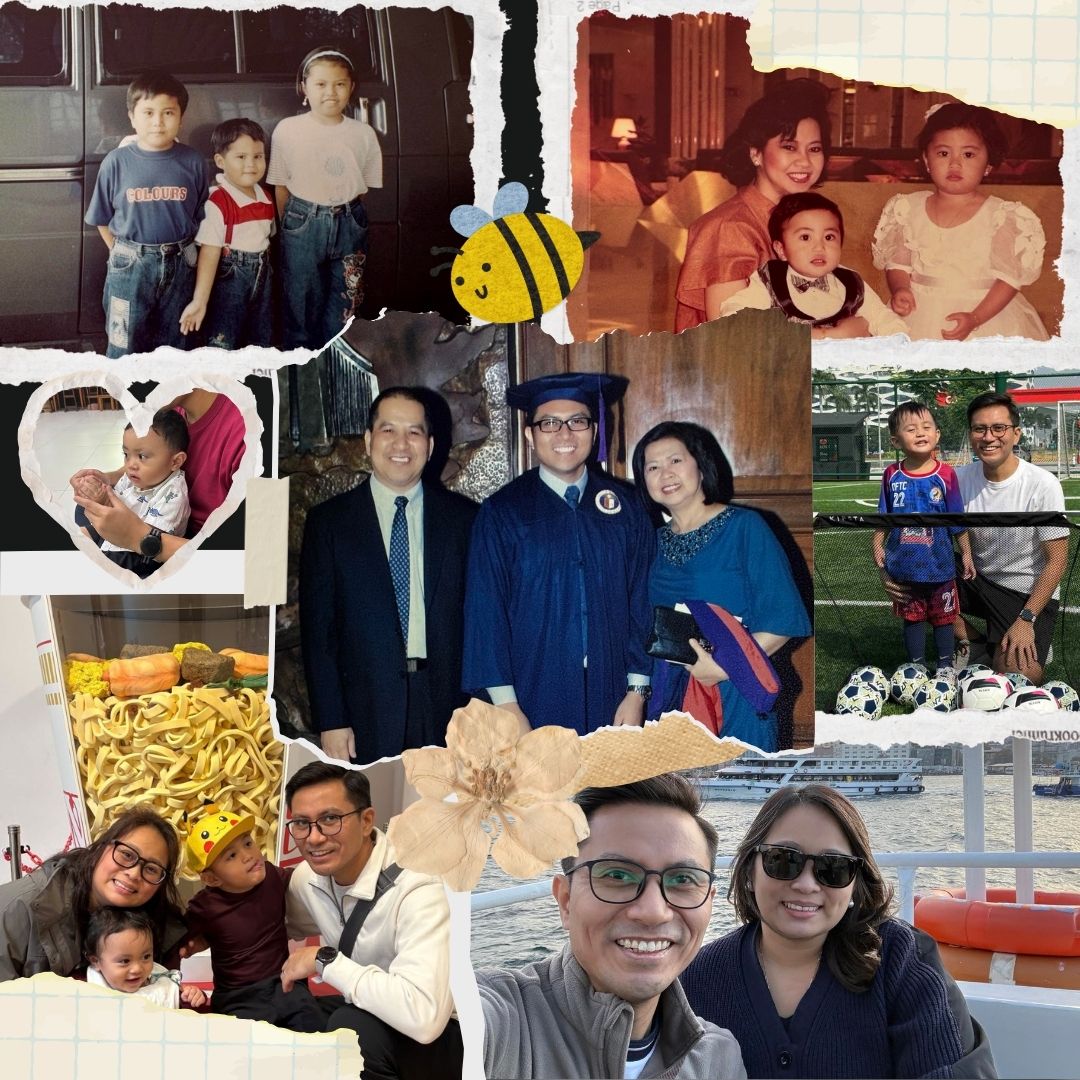
27 December 2025 – HAPPY BIRTHDAY, KCI
Growing Up Before His Time: Lessons from an OFW Childhood
For much of his childhood, Kristoffer Edward “Kris” C. Iranzo grew up knowing that love sometimes arrives in short visits, balikbayan boxes, and annual Christmas homecomings.
Both of his parents were Overseas Filipino Workers who met in Saudi Arabia. Kris and his older sister were born there, but when the family returned to the Philippines in 1990, only his mother (who was expecting the youngest son) and siblings stayed. His father remained abroad, continuing to work to support the family; coming home once a year, sometimes twice, for only a few weeks at a time.
That physical absence quietly reshaped everything.
Kris was the middle child, but he was also the eldest son. And in many Filipino households, that distinction carries weight. While no one formally crowned him “man of the house,” the role found him anyway.
“At first, it was explicit,” he recalls. “My mom had to tell me what to do. But eventually, I just did things on my own. I always thought, no one else is going to do it, so I’m going to do it.”
He ran errands. He did the heavy lifting. He stayed close to his mother, accompanying her wherever she needed to go. Responsibility wasn’t a lesson he learned later in life, it was built into his routine while his father worked thousands of miles away.
Growing up this way made him closer to his mother, but it also forced him to mature early.
“I had to do things not just for myself, but also for my family.”
But maturity came with sacrifices.
While others his age partied, traveled, or stayed out late, Kris stayed home. When he learned how to drive, responsibility increased again. He had to drive his mother and sister, which meant no drinking, no recklessness. Many nights he watched from the sidelines as others lived more freely.
“There were times I resented not being able to experience what everyone else experienced,” he admits. “I had to be the responsible one.”
Still, he doesn’t see his childhood as deprivation, just different.
His father’s visits were rare but unforgettable. When he came home, life shifted. Money that had been carefully saved was suddenly spent on trips and outings. Those weeks felt like celebrations, compressed versions of a family life that couldn’t exist year-round.
Yet even then, time together was limited. School schedules, routines, and responsibilities meant that sometimes, even when his father was physically present, they could only really spend time on weekends.
When his father finally came home for good in 2013, the family faced a surprising truth: they didn’t really know him.
“We weren’t used to him being around,” Kris says. “We had to figure out what he liked, what he didn’t like. It took about a year before we became comfortable.”
They learned that he enjoyed stillness, quiet, and being at home. Slowly, the relationship shifted from polite cohabitation to something warmer and more familiar. Today, they bond over Formula 1, a shared love that started in Kris’s childhood. They don’t cheer for the same drivers, but they cheer for the same teams, Ferrari, mostly.
That long absence shaped more than just family dynamics; it shaped how Kris works. Growing up, he learned to anticipate what needed to be done without being told.
“I don’t like waiting for instructions,” he admits. “I took the initiative. I think that helped me move up.”
That mindset followed him into his professional life. Now a member of the Firm’s Corporate Practice Group, Kris handles complex matters in intellectual property, taxation, real estate, mergers and acquisitions, and corporate restructuring. A Certified Public Accountant and lawyer, he is known for his reliability, foresight, and steady sense of responsibility: the same traits forged when he was a boy taking out the trash at night because someone had to do it.
As a leader, he tries to pass that mindset on. “I want them to know what needs to be done without me always telling them,” he says. “I try to guide and mentor them.”
If his younger self were reading this now, he knows exactly what he’d say: It will be worth it.
Those early hardships built resilience. As a middle child, he learned to push himself without being pushed. To prove his worth quietly. To grow into someone dependable.
That perspective shapes how he fathers his own children.
Subconsciously, he tries to be present in ways his father couldn’t. Not because his father didn’t want to be there, but because circumstances didn’t allow it. Kris works from home when he can. He brings his son to football lessons. He makes time.
“I told myself I’m not going to go away for long periods of time,” he says.
And now, seeing his father as a grandfather has reframed everything.
“He’s a really good Lolo,” Kris says, smiling. “The first thing he does when he sees us is pick up the youngest.”
With that comes a deeper appreciation of what his father gave up; years of watching his children grow, traded for stability and opportunity.
“When you switch your perspective from ‘my dad wasn’t there for me’ to ‘my dad missed out on my growing up,’ it’s jarring,” Kris reflects. “He sacrificed so much.”
In the end, the story isn’t about absence. It’s about quiet endurance. The endurance of a father who worked abroad so his family could stand stronger, and of a son who grew up faster than most, carrying responsibility long before he carried a title (Interview and write-up by: Zeus “Earl” Roy D. Custodio Jr.)